
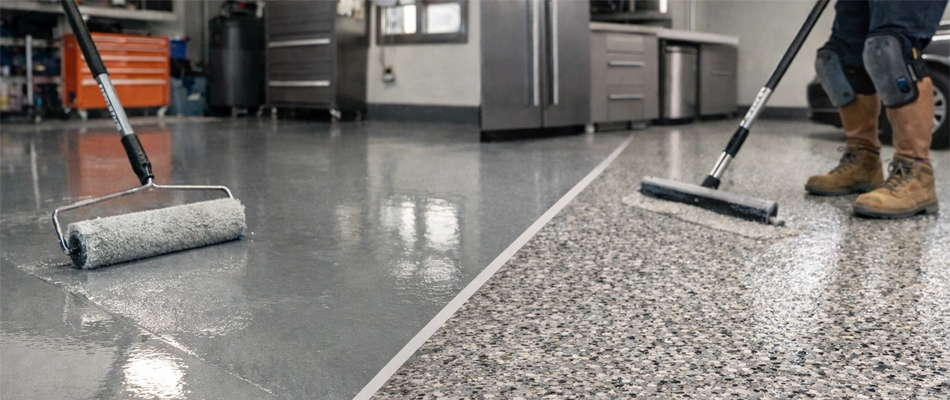
When you decide to upgrade your concrete floors—whether for a high-traffic commercial warehouse or a residential garage in Charlotte—you are faced with a critical decision: epoxy or polyaspartic.
While both are popular “resin” coatings, they are far from equal. Choosing the wrong material can lead to costly repairs, unsightly yellowing, and floors that peel under the heat of a summer afternoon. At Concrete Coatings of the Carolinas, we believe a floor coating is more than just a surface treatment—it is an investment in your property’s value and functionality.
This guide will break down the technical differences, pros, and cons of each system to help you determine which coating is the right fit for your specific needs.
The Traditional Standard: What Is Epoxy?
For decades, epoxy has been the go-to solution for concrete protection. It is a thermosetting polymer created by mixing a resin with a hardener. When applied, it forms a thick, durable layer that bonds to properly prepared concrete.
In many indoor settings, epoxy performs admirably. It offers a high-gloss finish and is generally more affordable upfront than newer technologies. However, epoxy has several inherent weaknesses that have led many property owners to seek more durable alternatives.
The Pros of Epoxy Floor Coatings
- Cost-Effective: If you are working with a strict budget for a climate-controlled indoor space, epoxy offers a lower initial
price point. - Ease of Application: Epoxy has a longer “pot life,” meaning it remains liquid longer before hardening. This makes it a popular choice for DIY kits found in big-box stores.
- Chemical Resistance: It provides a solid barrier against oils, cleaners, and mild chemicals, which is why it has traditionally been used in commercial flooring in Charlotte.
The Cons of Epoxy Floor Coatings
- UV Sensitivity: Epoxy is not UV-stable. When exposed to sunlight—even through a garage window—it begins to “amber,” or yellow, over time.
- Brittleness: Epoxy is rigid. As concrete expands and contracts with fluctuating temperatures in North Carolina, epoxy can crack or delaminate because it cannot move with the slab.
- Long Cure Times: Standard epoxy can take 24 to 72 hours to cure. This means your garage or business may be out of commission for several days.
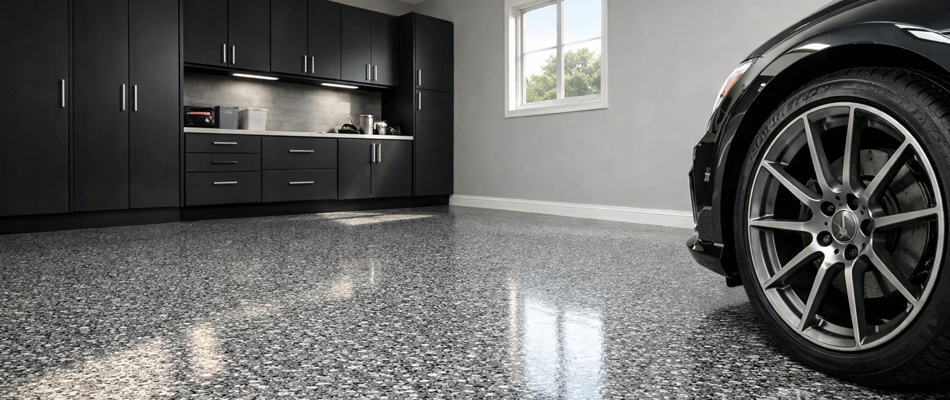
The Modern Powerhouse: What Is Polyaspartic?
Polyaspartic is a subset of polyurea. Originally developed to protect steel bridges and heavy industrial equipment from environmental exposure, it was later adapted for concrete flooring systems. Today, it has become the gold standard for professional installations—especially for garage floor coatings in Charlotte, NC.
The Pros of Polyaspartic Floor Coatings
- Extreme Durability: Polyaspartic coatings are roughly 4 to 5 times more durable than standard epoxy. They offer significantly greater resistance to impacts, scratches, and abrasions.
- UV Stability: Unlike epoxy, polyaspartic coatings will not yellow. They maintain their crystal-clear or pigmented finish even under direct sunlight, making them ideal for outdoor patios or garages with high sun exposure.
- Flexibility: Polyaspartic coatings are 98–100% more flexible than epoxy. They act as a breathable membrane that moves with the concrete slab, dramatically reducing the risk of peeling or cracking.
- Rapid Cure Time: This is a major advantage for both homeowners and businesses. A polyaspartic system can often be installed and cured in a single day. In many cases, you can walk on the surface within hours and park your vehicle on it the following day.
The Cons of Polyaspartic Floor Coatings
- Higher Initial Investment: The materials are more expensive than epoxy, and because of the rapid cure time, installation typically requires a trained professional crew.
- Slippery When Wet: Like many smooth, high-performance coatings, polyaspartic surfaces can become slippery when moisture is present. However, at Concrete Coatings of the Carolinas, we address this by incorporating specialized slip-resistant textures during application.
Head-to-Head Comparison: The Factors That Matter
1. Longevity and Maintenance
An epoxy floor in a high-traffic area may require a fresh topcoat every 3 to 5 years to maintain its appearance and performance. In contrast, a professionally installed polyaspartic floor is designed to last for decades. When you factor in the cost of recoating—along with the hassle of moving equipment or belongings multiple times—the seemingly “more expensive” polyaspartic system often becomes the more economical choice over a 10-year period.
2. The Charlotte Climate Factor
Living in the Carolinas means dealing with high humidity and rapid temperature swings. These conditions are particularly demanding on concrete surfaces. Epoxy’s brittle nature makes it prone to “hot tire pickup,” a phenomenon in which heat from vehicle tires softens the coating and causes it to peel away when the car is moved. Polyaspartic’s superior thermal stability and bond strength make it far more resistant to this common problem.
3. Downtime and Productivity
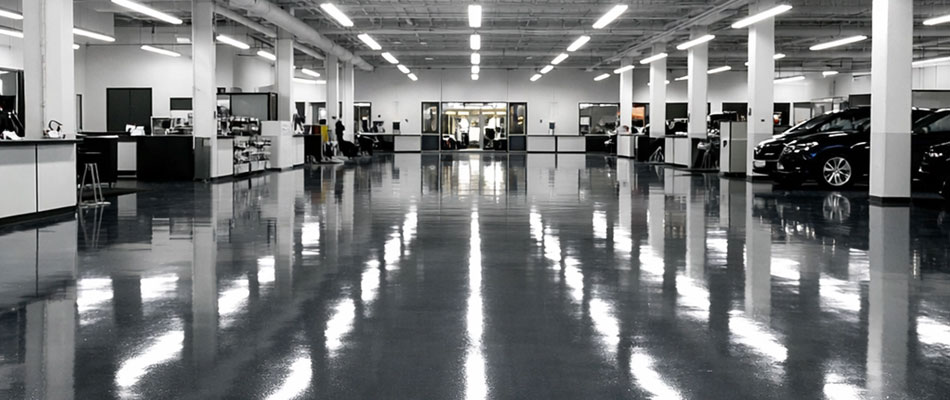
For a commercial warehouse or busy retail store, every hour of downtime represents lost revenue. An epoxy installation may require shutting down operations for up to three days. By contrast, polyaspartic-based industrial floor coating systems can often be installed in a single day. In many cases, projects can be completed over a weekend or even within a single shift, allowing operations to resume quickly and without disruption.
Which One Should You Choose?
To help you self-qualify, we’ve outlined the ideal use cases for each material.
Choose Polyaspartic Floor Coatings If:
-
You want a “one-and-done” solution designed to last for decades.
-
The floor will be exposed to sunlight (garages, patios, or retail storefronts).
-
You want maximum resistance to scratches from tools, pets, or heavy equipment.
-
You want to increase the resale value of your home with a premium, long-lasting finish.
Choose Epoxy Floor Coatings If:
-
You are coating a strictly indoor, temperature-controlled space with no sunlight (such as a basement storage room).
-
The floor will experience very light foot traffic and no heavy vehicles.
-
Your primary priority is lower upfront cost, and you are comfortable with the possibility of maintenance or recoating within a few years.
The Risks of the DIY "Box Kit" Approach
It is tempting to grab an epoxy kit from a local home improvement store for a few hundred dollars. However, these kits are often "water-based" epoxies with very low solids content. They lack the industrial-grade resins required to bond permanently to concrete.
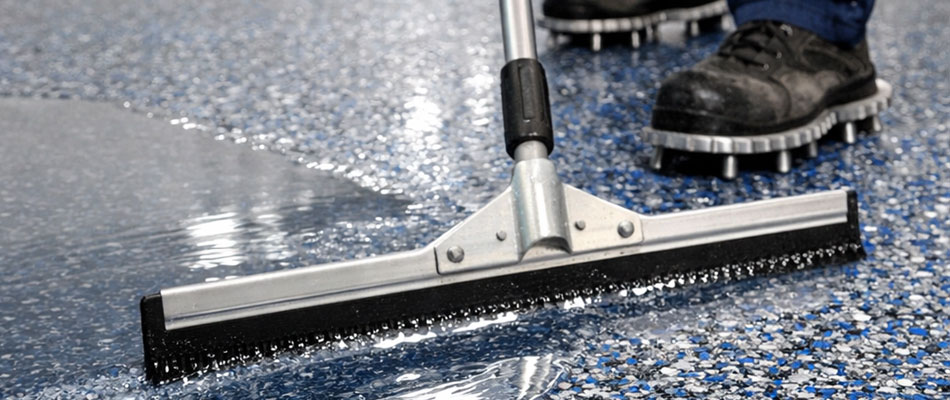
Most failures we see at Concrete Coatings of the Carolinas are from DIY kits that began peeling within the first year. Professional installation involves a rigorous installation process including diamond grinding the surface to open the concrete's pores. Without this mechanical preparation, neither epoxy nor polyaspartic will hold.
Commercial vs. Residential Needs
For Homeowners
Your garage is often the primary entrance to your home. It must withstand salt, rain, hot tires, and dropped tools. For this reason, we almost exclusively recommend polyaspartic garage floor coatings for residential installations. Polyaspartic systems perform exceptionally well in the real-world conditions typical of Carolina homes.
For Business Owners
In commercial environments, the best choice depends largely on the industry. A retail store may benefit from the aesthetic appeal and UV stability of polyaspartic coatings, while a heavy chemical processing facility may require specialized systems, such as commercial novolac flooring, designed for extreme chemical and acid resistance.
Final Thoughts: A Smart Investment in Your Property
When comparing epoxy vs. polyaspartic, the right choice ultimately depends on your goals. If you want a floor that looks as good in ten years as it does the day it’s installed—without yellowing, cracking, or peeling—polyaspartic is the clear winner.
At Concrete Coatings of the Carolinas, we specialize in high-performance coatings designed to withstand the unique conditions of the Charlotte area. We don’t just “paint” your floor—we transform it into a durable, easy-to-clean, and visually striking asset for your property.
Ready to See the Difference for Yourself?
Explore our gallery to view recent transformations, or contact us today for a free, no-obligation estimate. Our team will help you choose the ideal coating system for your space, ensuring long-lasting performance and exceptional results.
Free Consultation
The consultation process will include:
- A survey of your space
- Provide you with a handful of recommendations
- Guiding you to the one that’s best for your needs
From there, we can quote you a transparent price upfront.